
The Dazcat Story: Race Winners, Capable Cruisers and Accessible Catamarans
HOW DO THEY ALL SHARE THE SAME DAZCAT DNA?
Dazcat hasn't evolved from performance into accessibility. There have been decades of design, offshore experience and custom boatbuilding. All of that knowledge has been applied to accessibility almost since the very beginning, and the learning gained from accessible design and build has influenced all our boats.
We are now building what are thought to be the world’s first semi-production accessible catamarans on the very same hull platform designed to carry forward Dazcat’s race-winning pedigree. Bringing accessibility, offshore capability and exhilarating sailing together in one Dazcat design.
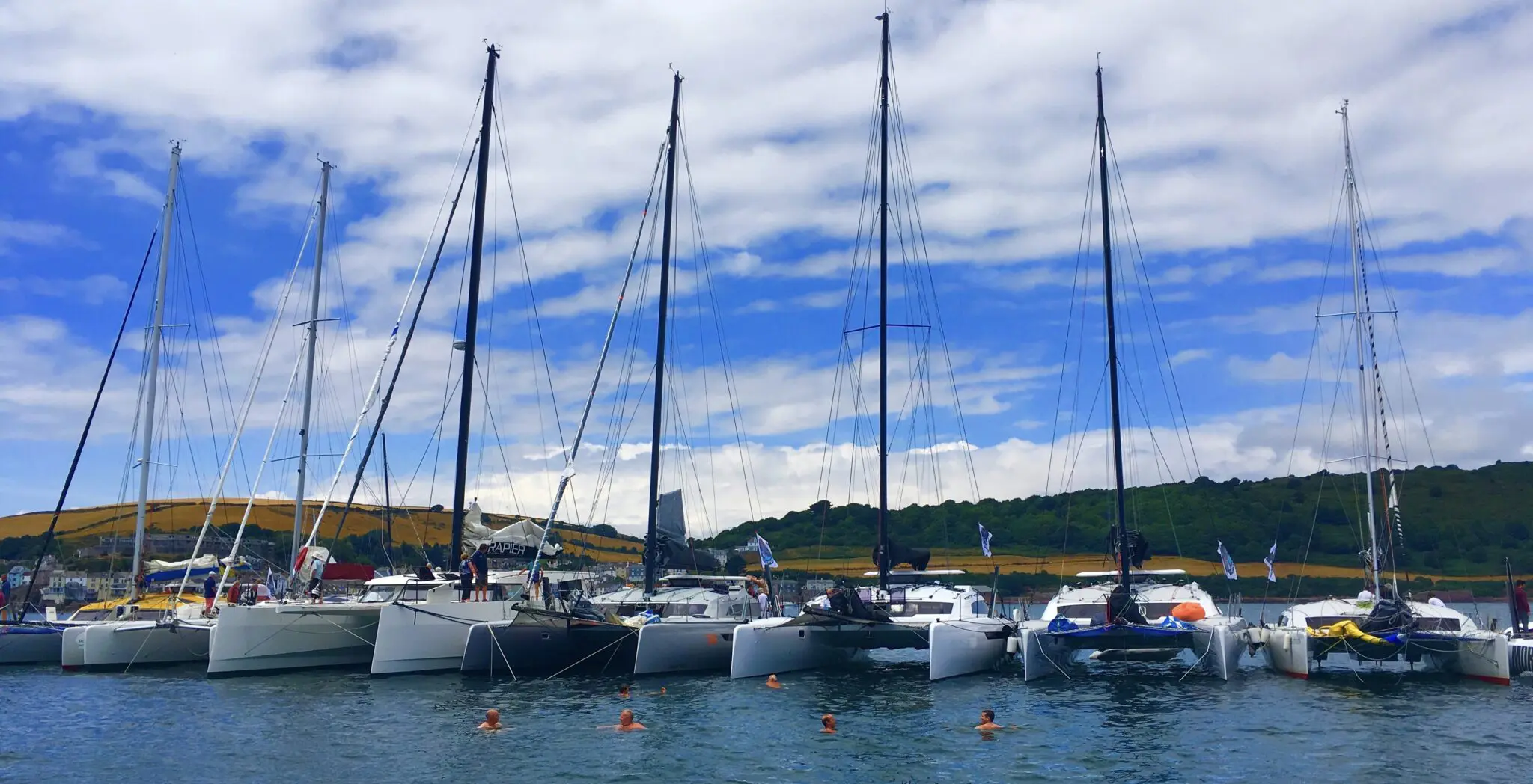
For almost four decades, Dazcat has quietly earned a reputation for building some of the fastest, strongest and, for those who know, among the most respected cruiser-racer catamarans in Europe. Described by the French Multihulls World magazine as the "Connoisseur’s catamaran".
The same engineering decisions that create faster, stronger offshore yachts also create safer, more forgiving and ultimately more accessible boats. It turns out that designing a boat capable of looking after its crew in extreme conditions is remarkably similar to designing one that removes barriers for sailors with different physical abilities.
Dazcats have won numerous major offshore races, crossed oceans, circumnavigated Britain and Ireland both cruising and as race winners, rounded Cape Horn, living the dream as full time liveaboards in tropical climates...Paradox, originally launched in 1997 for accessible racing, will even circumnavigate the Arctic Circle this year. Our boats have carried their crews safely for many countless 1000s of miles and it seems fair to say they pretty much do it all.
Dazcats have been designed not for fashion or fleeting trends, but for sailors who value speed, strength, longevity and the confidence to keep going when conditions deteriorate.
Yet perhaps Dazcat's greatest achievement isn't a race result at all.
It is the journey that has led from building race-winning offshore catamarans to creating what is believed to be the world's first semi-production range of genuinely wheelchair-accessible performance cruising catamarans.
Those two stories are far more closely connected than they first appear. We talk you through how this has come about in the article below:
Page Contents

Built to Sail, not just to Sell
Since the late 1980s, Dazcat has never tried to build the largest number of boats.
Instead, every design has been owner-led and every boat begins with conversations rather than marketing departments. Owners arrive with dreams, ambitions and experience (or occasionally no experience, just aspirations). Designers respond with solutions rather than compromises. Designers, builders and yard and project managers share the same office, so discussion is free flowing and solutions are a product of shared knowledge and experience.
The result is a fleet where no two boats are exactly alike, yet all unmistakably share the same DNA:
- Lightweight composite construction.
- Exceptional structural strength.
- Outstanding performance.
- Practical cruising capability.
- And perhaps most importantly, boats built to remain in service for decades rather than years.
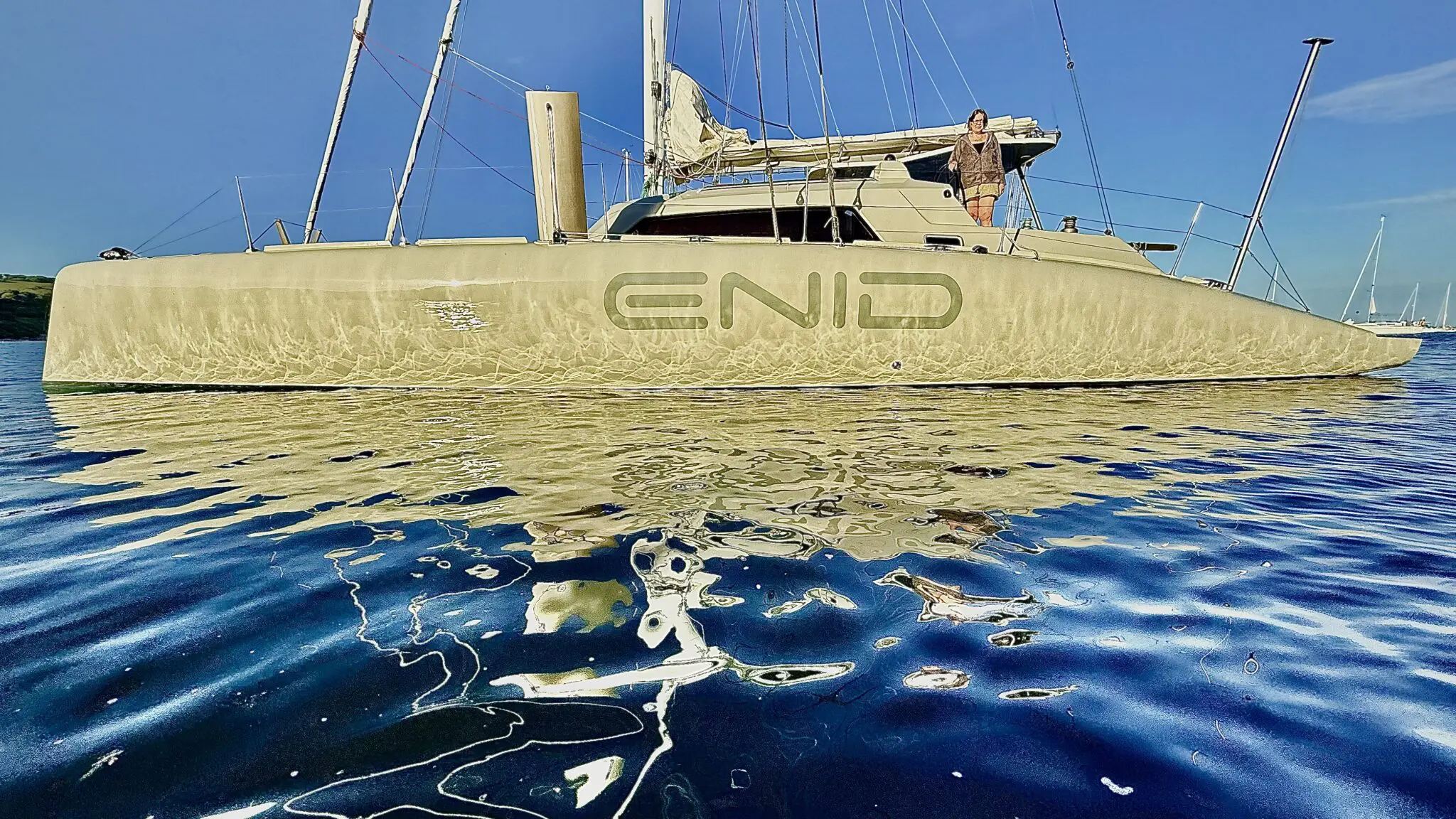
Many early Dazcats are still sailing today, often after thoughtful refits and gradual updates over time rather than replacement. It reflects a philosophy that values longevity and continual improvement over planned obsolescence.
Performance with Purpose
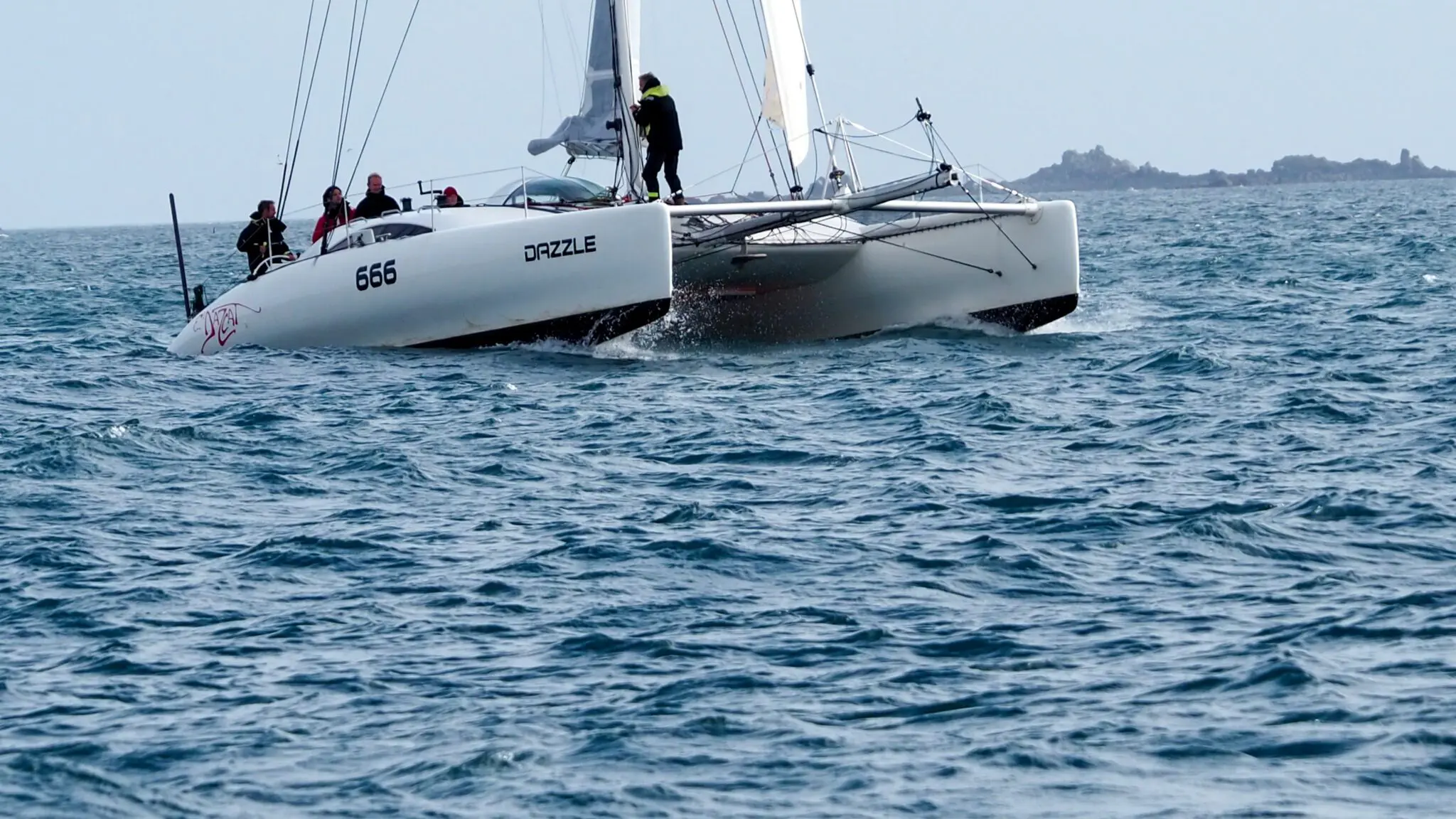
Performance, a word we try to avoid as we feel is mostly misappropriated, has in fact always been central to the Dazcat story.
At Dazcat, performance has never simply meant sailing faster. It means making better progress with less effort, reducing fatigue, increasing safety and extending the weather window available to every crew. Speed is only one expression of efficiency. Ease of use and systems keeps crew able to perform at optimum levels, if they want to. It also means the boats are easy to depower and sail ‘at ease’, or at whatever level the skipper feels happy with.
The lightweight hulls mean being able to keep sailing when others switch to engines Good performance makes cruising more enjoyable as much as it wins races. It also creates benefits such as peace and quiet, less wear on your engine systems, and fuel savings.
That philosophy has repeatedly been proven offshore as the racecourse is where we try, test and prove.
Dazcats have accumulated victories across some of Europe's toughest offshore events, including the Fastnet Race, Round Britain and Ireland Races (both of them), Round Ireland Race, AZAB, Cowes Offshore Series, RORC Championships and, most recently, France's prestigious Drheam Cup. In earlier times there were also the 0 star and the Two Star victories.
Recent years have perhaps demonstrated this better than ever and a passionate and dedicated community has built around it.
The latest generation Dazcats have established themselves among Europe's most successful offshore semi-production performance cruising catamarans.
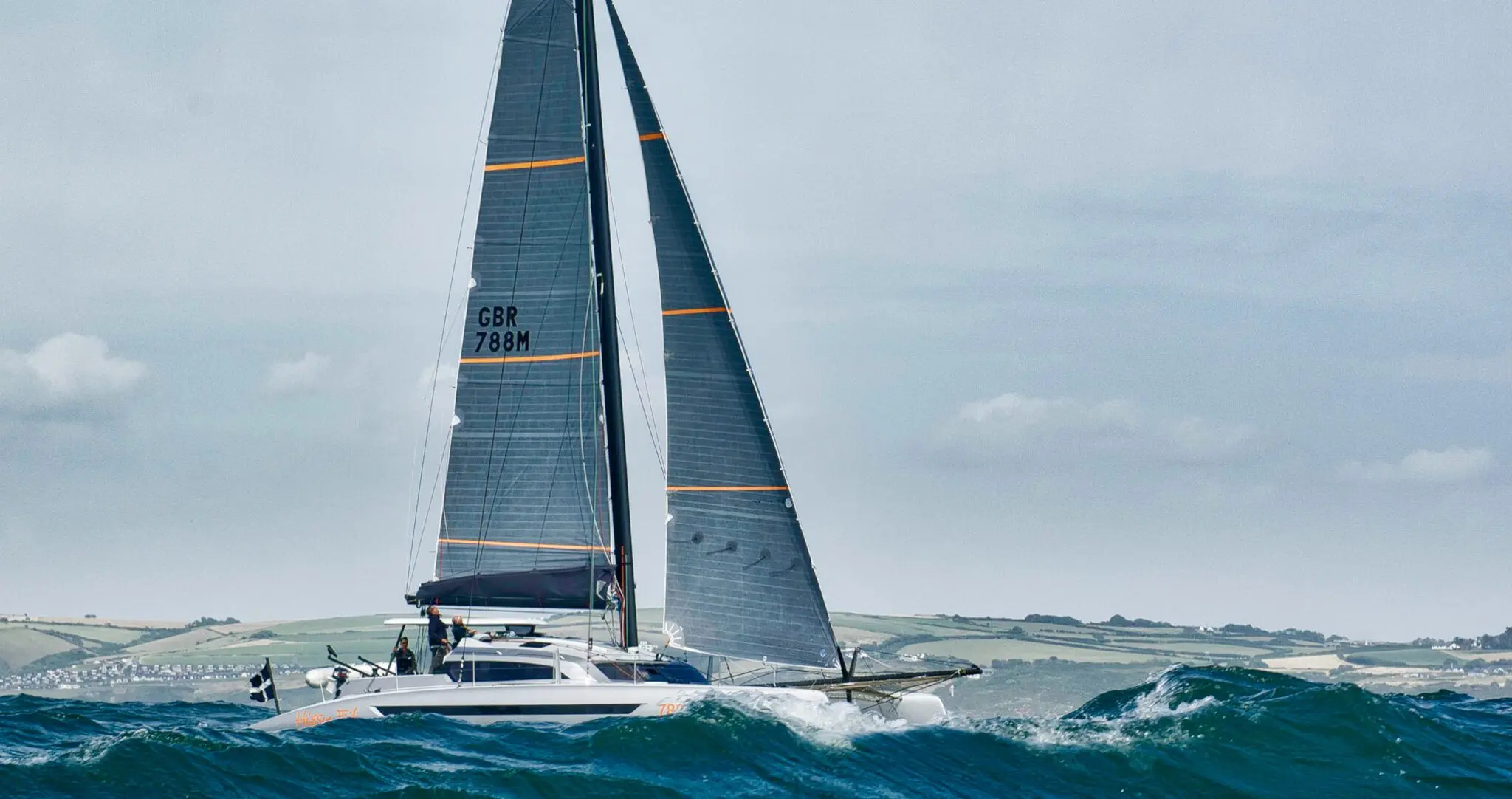
Boats such as Minor Swing, Hissy Fit and DMS Vinyl have consistently fought at the front of highly competitive fleets, collecting line honours, overall championships and major offshore victories.
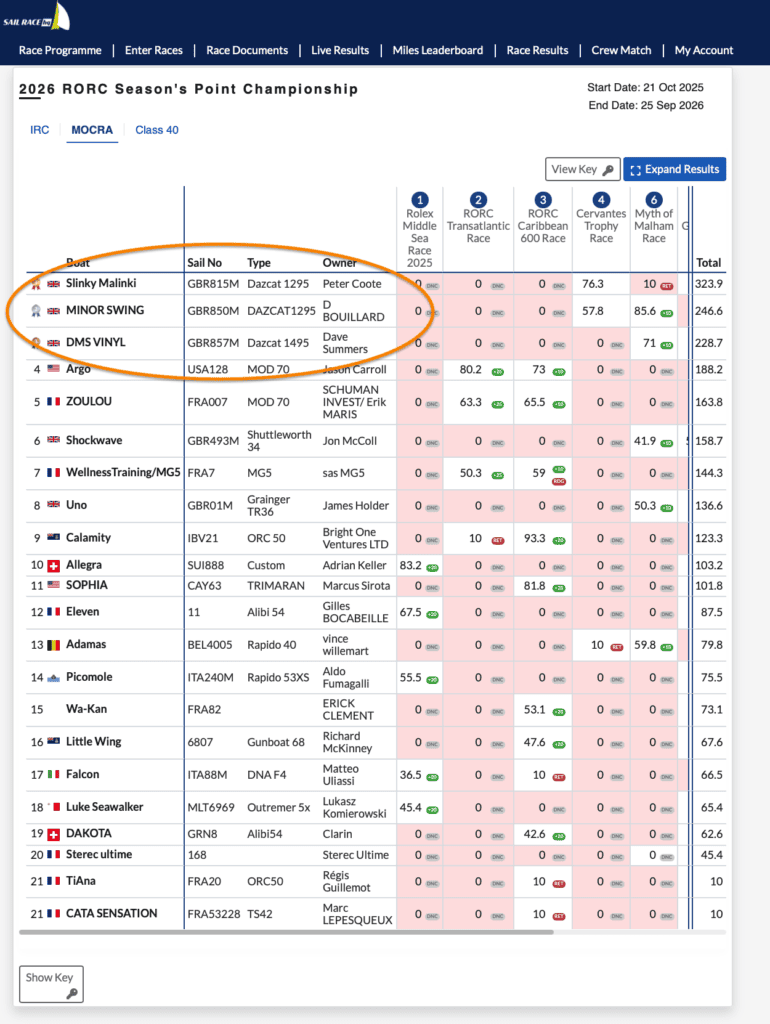
This is nicely demonstrated in the 2026 RORC Season's Points Championship with just one race left and Dazcats are neatly lined up in 1st, 2nd and 3rd places! This after Minor Swing coming 1st for the past two seasons.
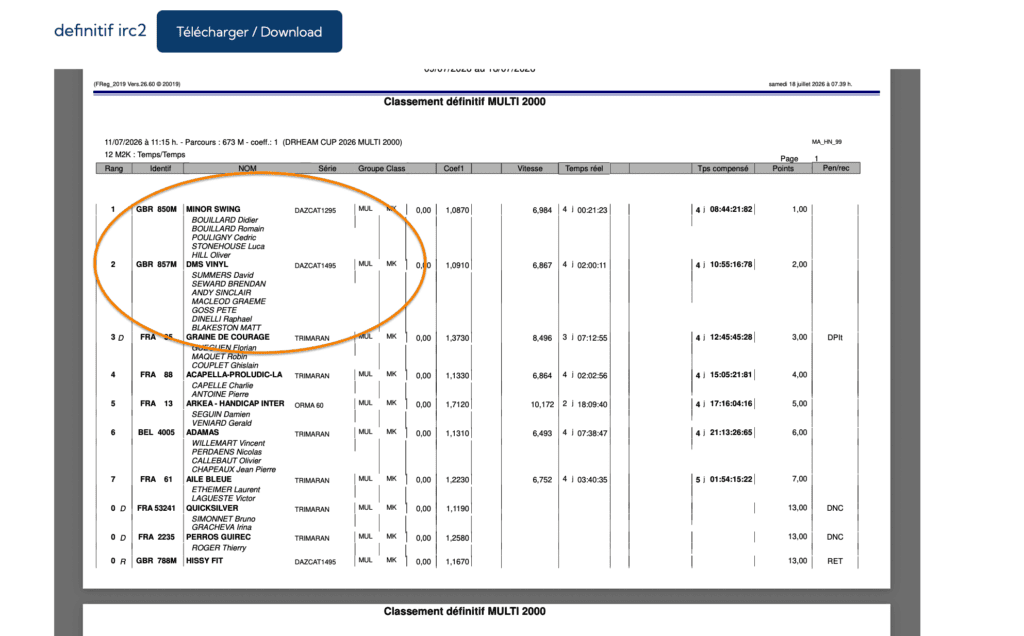
When Minor Swing and DMS Vinyl came 1st and 2nd in the 2026 Drheam Cup Multi 2000 class, against one of the world's strongest multihull nations, it represented more than another trophy. It demonstrated that a British-designed and built catamaran could prevail in France, a country quite rightly regarded as the spiritual home of offshore multihull racing.

Offshore Racing is Dazcat's R&D 'Lab'
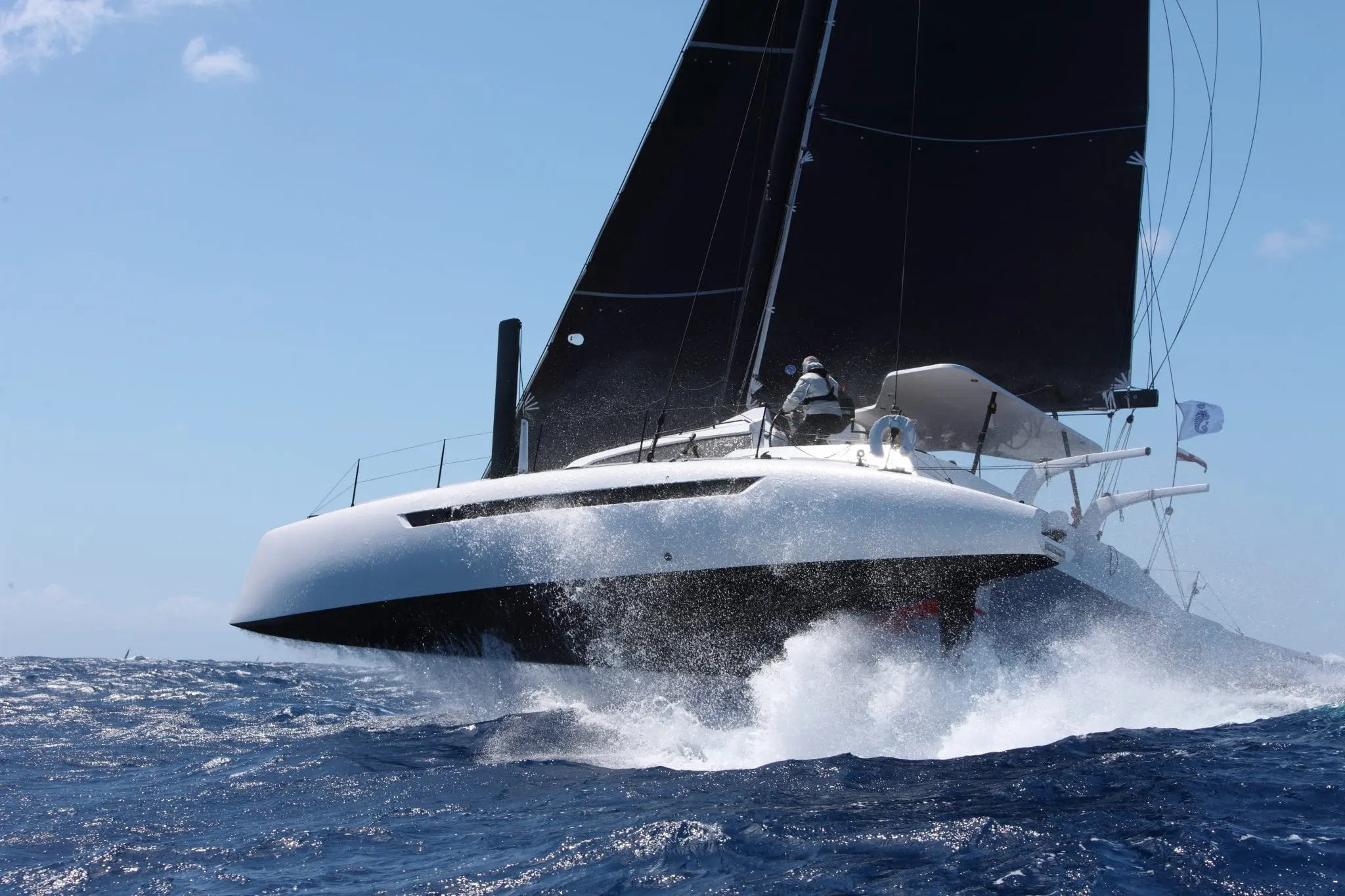
It is here, in unpredictable and often extreme offshore conditions that we scrutinize our boats in detail. Cruisers can pick their weather windows or turn on the engines when the wind dies, racers not so much. Key members of the design and build teams, as well as others who work with us are frequent Dazcat sailors, passionate about their both their work and sailing. Constantly on their minds they are assessing the boats all round performance and bringing their thoughts back to the teams. Some of their thoughts include:
- Structural testing – the inevitable poundings encountered, often over extended times in cold, wet and heat, quickly distills things down to a point where new ideas and solutions can emerge.
- Systems testing – which are most reliable, easy to use, easy to resolve any arising issues, best suit different uses, last longest, address which problems, offer the lightest or best solutions.
- Fatigue – both the boat and the crew need to stay as fresh as possible so how can that best be achieved?
- Sail handling – what is easiest, safest, most efficient for different purposes and people? Which sail plans favour different conditions? How to care for the sails and the people handling them.
- Weather and handling in different conditions – putting the boats through every condition from having to drag drogues in huge waves, to rowing a 50ft catamaran to race victory when the wind dies
- Reliability – we want every Dazcat owner to spend more time sailing and less time fixing things, so durability and serviceability are key benefits to all our Dazcats.
Innovation Beyond the Racecourse
While Dazcat's race victories often grab the headlines, some of its most remarkable achievements have taken place far from the finish line.
Long before accessible sailing became part of the wider conversation, Dazcat was already working alongside owners to remove barriers that prevented people from experiencing the freedom of the sea. Each project was unique, driven not by standard specifications but by individual ambitions that many believed impossible.
That philosophy first emerged publicly during the late 1990s.
The result has been a remarkable succession of boats that have steadily expanded what an accessible sailing yacht can be.
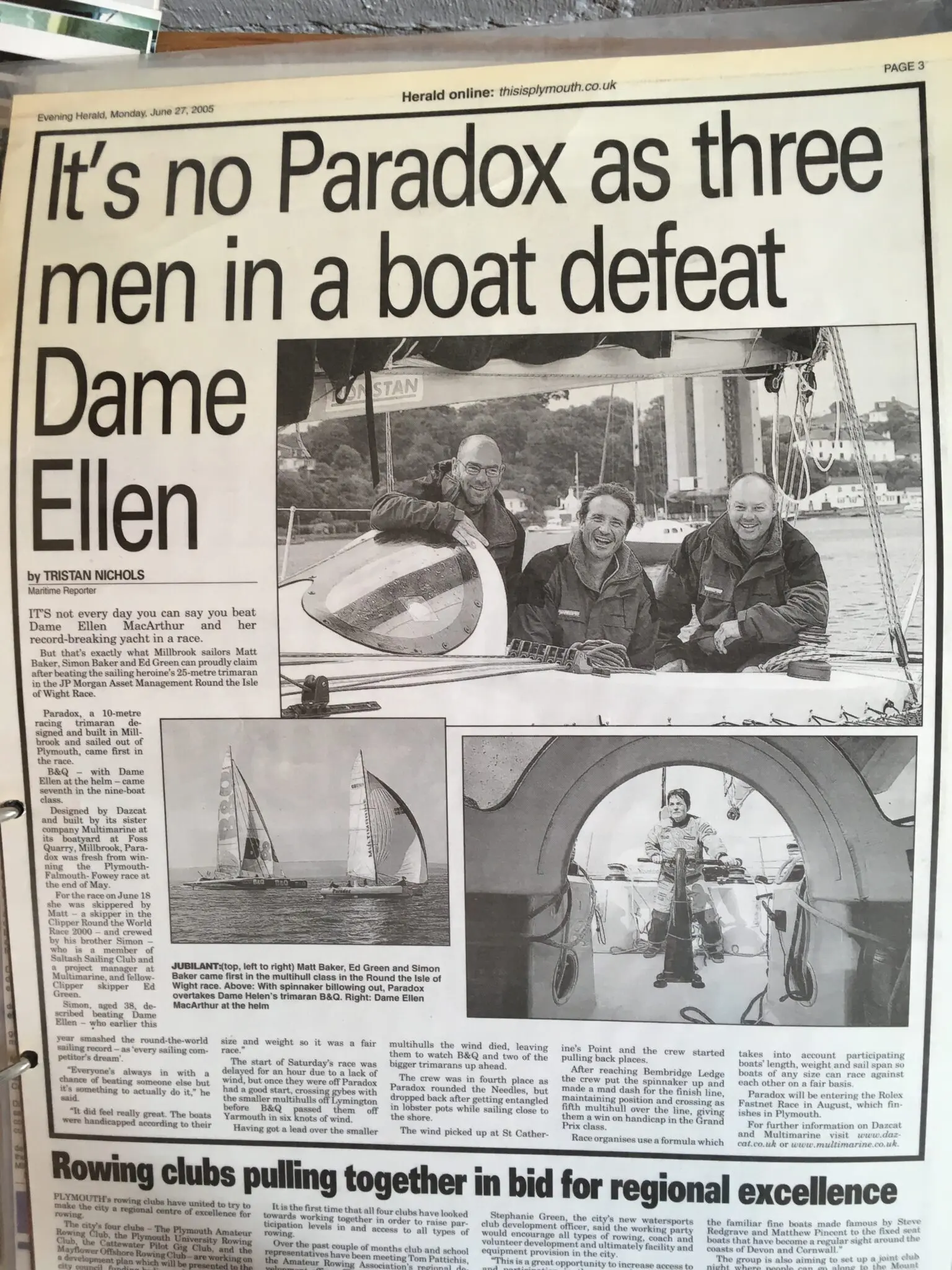
Dazcat 10 'Paradox'
In 1997 the Dazcat designed trimaran Paradox was launched. Built by Multimarine, Paradox was a trimaran designed specifically for a paraplegic sailor to compete in the Round Britain and Ireland Race.
Rather than adapting an existing design, the boat was conceived around the sailor. It proved that disability need not prevent serious offshore sailing. This really sparked our passion to bring sailing to more people
It proved that disability need not prevent serious offshore sailing but highlighted the need for better understanding and development.
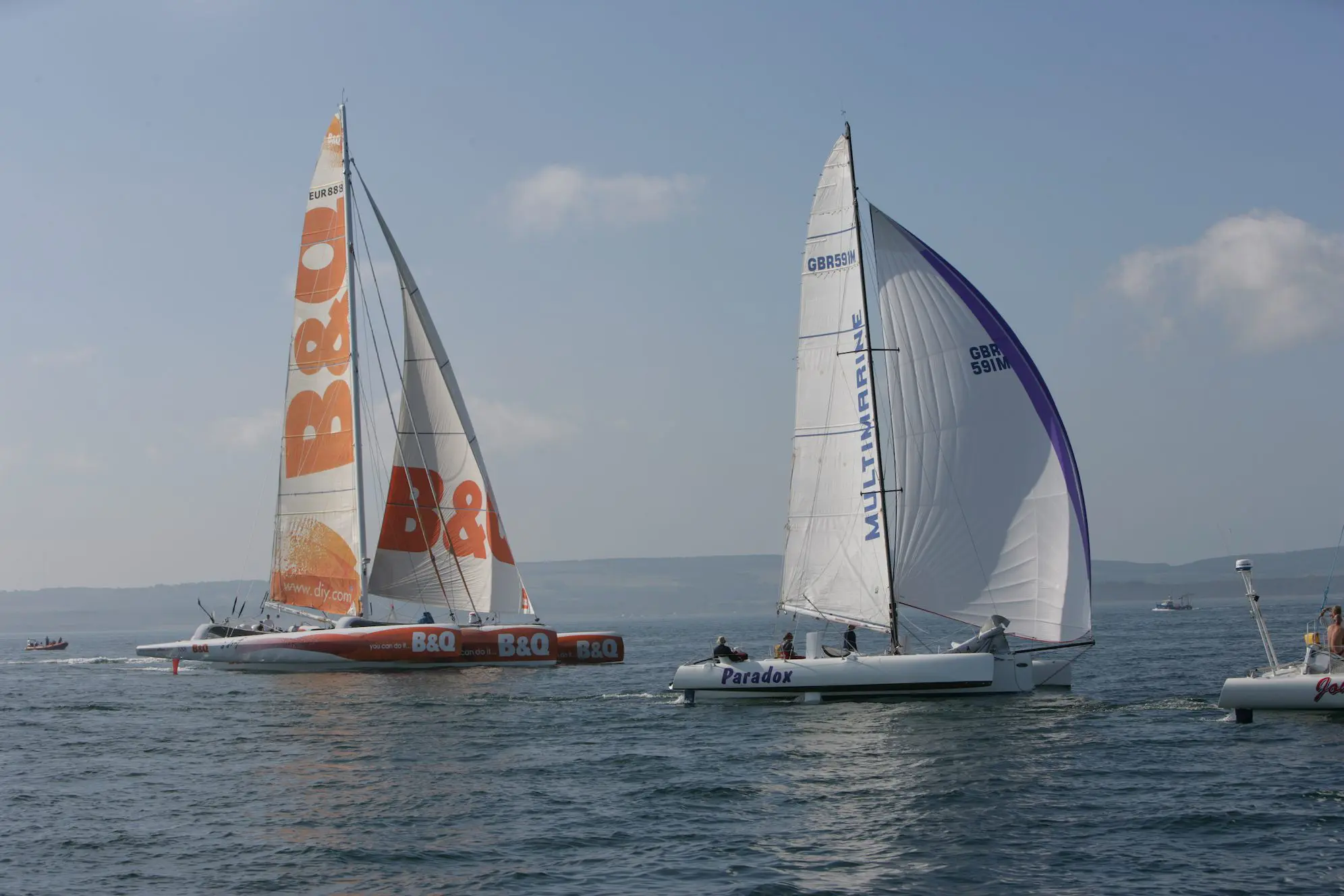
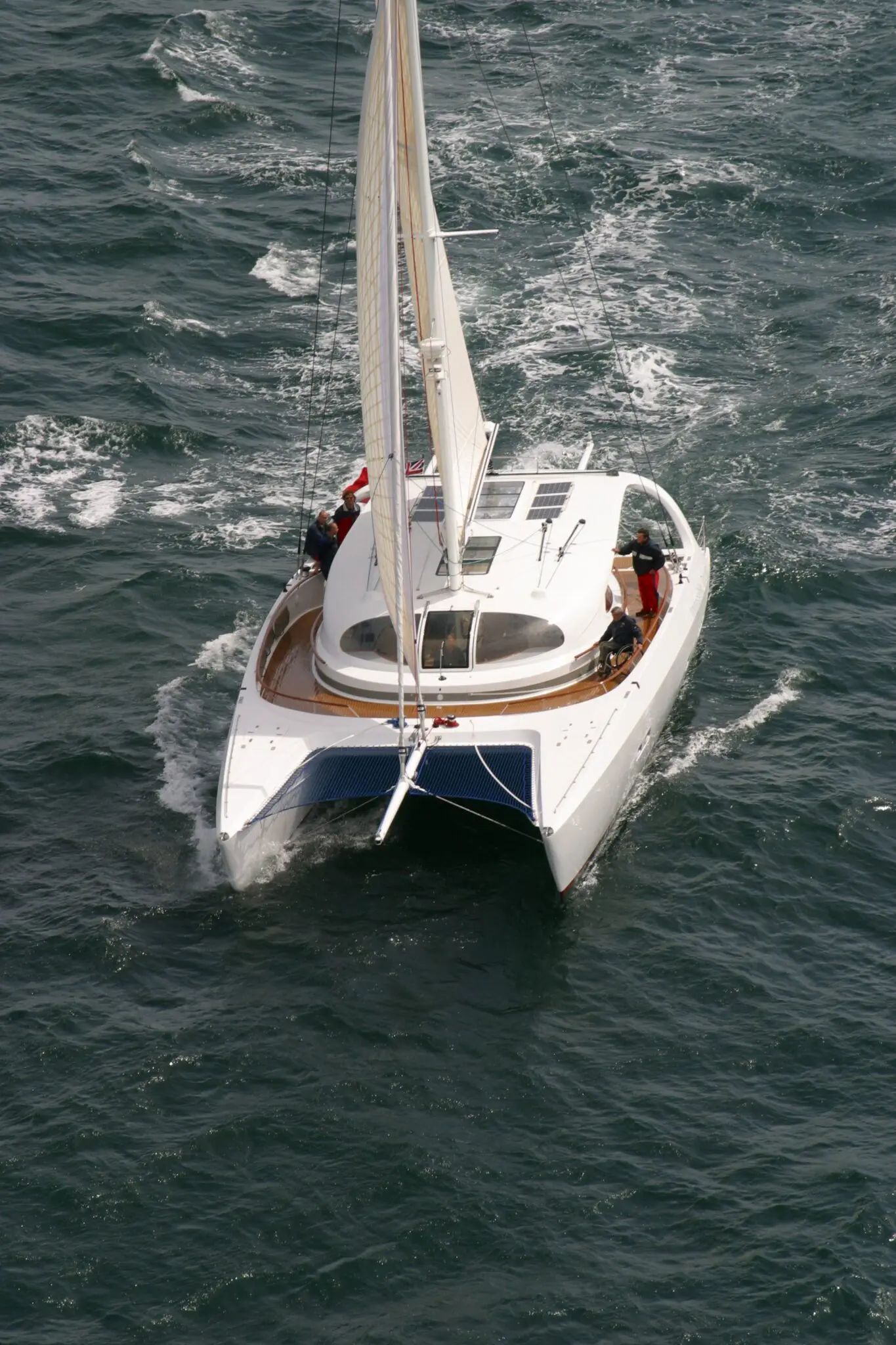
The Impossible Dream
The next major step came with The Impossible Dream, launched in 2002.
Commissioned by wheelchair user Mike Brown after a life-changing skiing accident, it incorporated complex control systems and accessibility features that had rarely, if ever, been attempted in an offshore cruising yacht.
The project, built at the Multihull Centre - a collaboration between renowned designer Nic Bailey and the Dazcat design team, became internationally recognised.
Later, quadriplegic sailor Geoff Holt MBE famously sailed The Impossible Dream solo across the Atlantic. The boat continues to inspire thousands of disabled sailors through its current home in Miami and through a collection of charities and their close work with Shake-a-leg Miami.
These boats were never simply engineering exercises. Mike Brown’s vision with Impossible Dream combined with Nic Baileys design concept created proof that accessibility and adventure could exist together and inspire others.
Expedition Dazcat 'Artemis - Redefining Accessible Sailing'
Perhaps no project better illustrates the philosophy of adventure and accessibility than Artemis.
Designed and built for former British Army Captain Tom Hughes following a life-changing spinal injury, Artemis was conceived not simply as an accessible performance cruising catamaran, but as a true expedition vessel. Every aspect of the design was driven by Tom's determination to sail independently from his wheelchair while retaining the performance and capability expected of a Dazcat.
One of her most striking innovations is immediately obvious: there is no mainsail.
Instead, designer Darren Newton developed a radical rig with the mast stepped further aft, carrying only headsails. Removing the mainsail eliminated one of the most physically demanding and potentially hazardous elements of sail handling while creating a remarkably simple, efficient and easily managed sailing system. Far from limiting the boat, the arrangement proved perfectly suited to long-distance passage making.
What followed has exceeded even the most ambitious expectations.
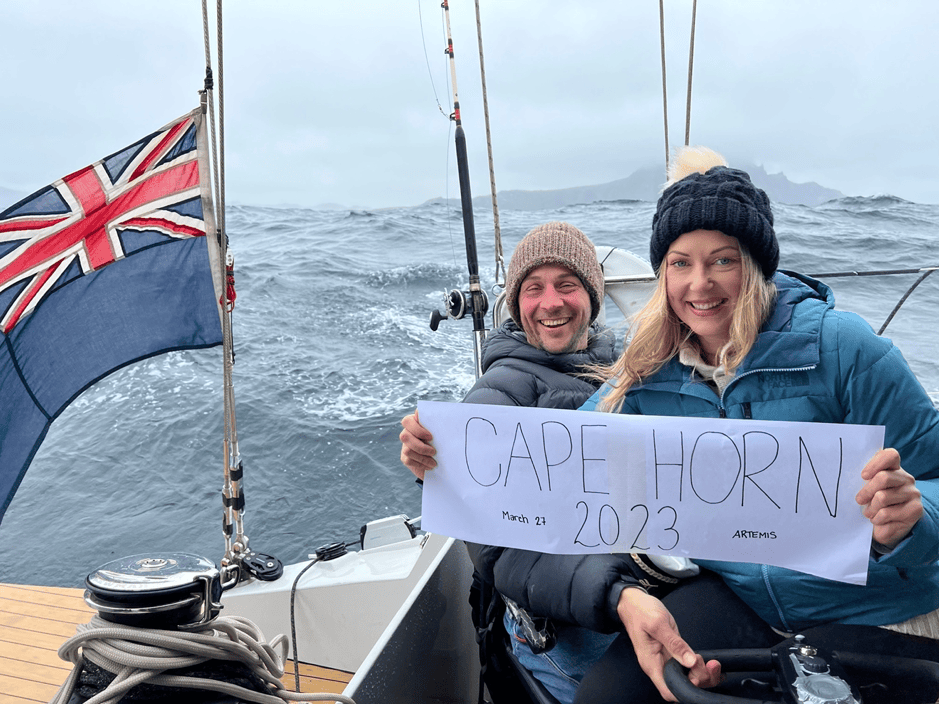
Together with his then girlfriend, now wife, Hannah, Tom has sailed Artemis across the Atlantic, explored South America, rounded the notoriously hostile Cape Horn, threaded the spectacular Patagonia Channels, at times navigating amongst snow and ice, before eventually reaching New Zealand. Along the way Artemis has served not only as a cruising yacht but also as a dive platform and floating home, proving that wheelchair accessibility and world-class expedition sailing are entirely compatible.


D1295XL 'Mangata 5' - A Boat that Changed a Family's World
Where Artemis was built for exploration, Mangata 5 was built for something equally important.
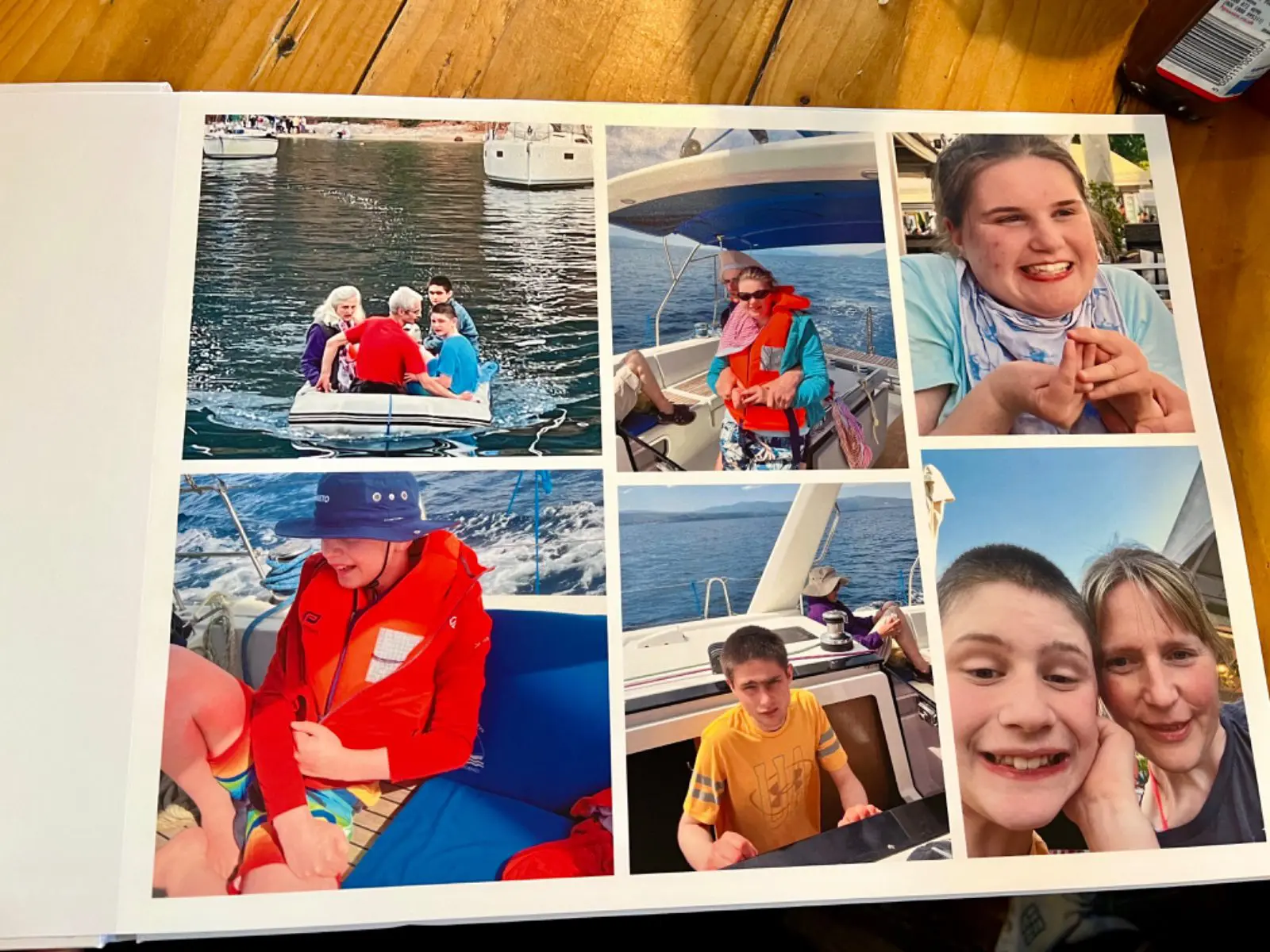
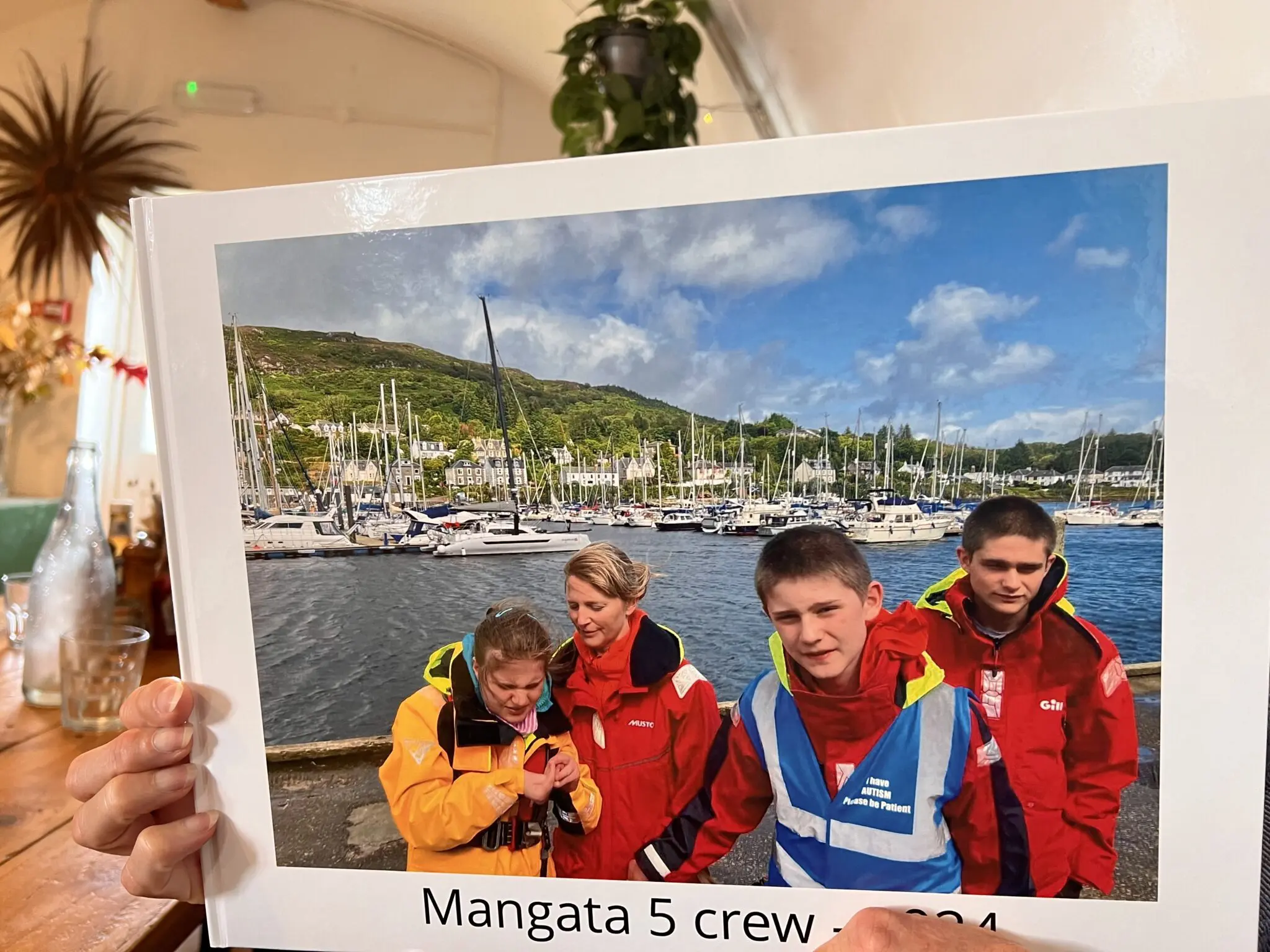
Ali and Tom weren't looking for a racing yacht. They wanted a boat that would allow their family, including three children with differing special physical, medical and emotional needs, to spend meaningful time together in an environment where everyone could benefit.
They needed a way to be able to travel and adventure together as a family, something that was difficult to the point of impossible via conventional means of travel. So Mangata 5 became their ‘barriers-free’ holiday destination.
Rather than adapting to an existing production boat, they commissioned a bespoke Dazcat 1295XL designed specifically around their family's needs. A wider coachroof, thoughtful accessibility features and owner-led adaptations created a platform where sailing itself became the hero to what it enabled.
The family chose to learn to sail together, building confidence at their own pace while discovering the therapeutic value of life on the water. Over the years, Mangata 5 has become exactly what they had hoped: a place of adventure, learning, confidence and togetherness. Their eldest son has since gained his Day Skipper qualification and even skippered his own flotilla yacht, while each member of the family has found their own connection with the sea.
Mangata 5 demonstrated something Dazcat had always believed but now has compelling evidence to support: the right boat can transform lives just as profoundly as it can cross oceans.
Every Project has Added Another Piece
Projects such as Paradox, The Impossible Dream, Mangata 5 and Artemis were never isolated commissions. Neither were others, such as the retro-fit accessibility features to a brand new Open 46 Nautitech or the 1295 built not to win races but to be a full time liveaboard and office while cruising in tropical waters.
Each solved a different challenge, introduced new ideas and generated knowledge that would quietly feed into future designs.
Perhaps most importantly, each has inspired others to believe that they too can find a way.
Wheelchair circulation.
Control systems.
Safe movement underway.
Single-handed operation.
Accommodation.
Living aboard for months or years.
The lessons accumulated over decades, alongside the experience gained from designing race-winning offshore performance cruising catamarans.
By the time the D1500 hull emerged, Dazcat already possessed an unrivalled understanding of how accessibility and high-performance sailing could work together.
The D1500 wasn't the beginning of Dazcat's accessible story.
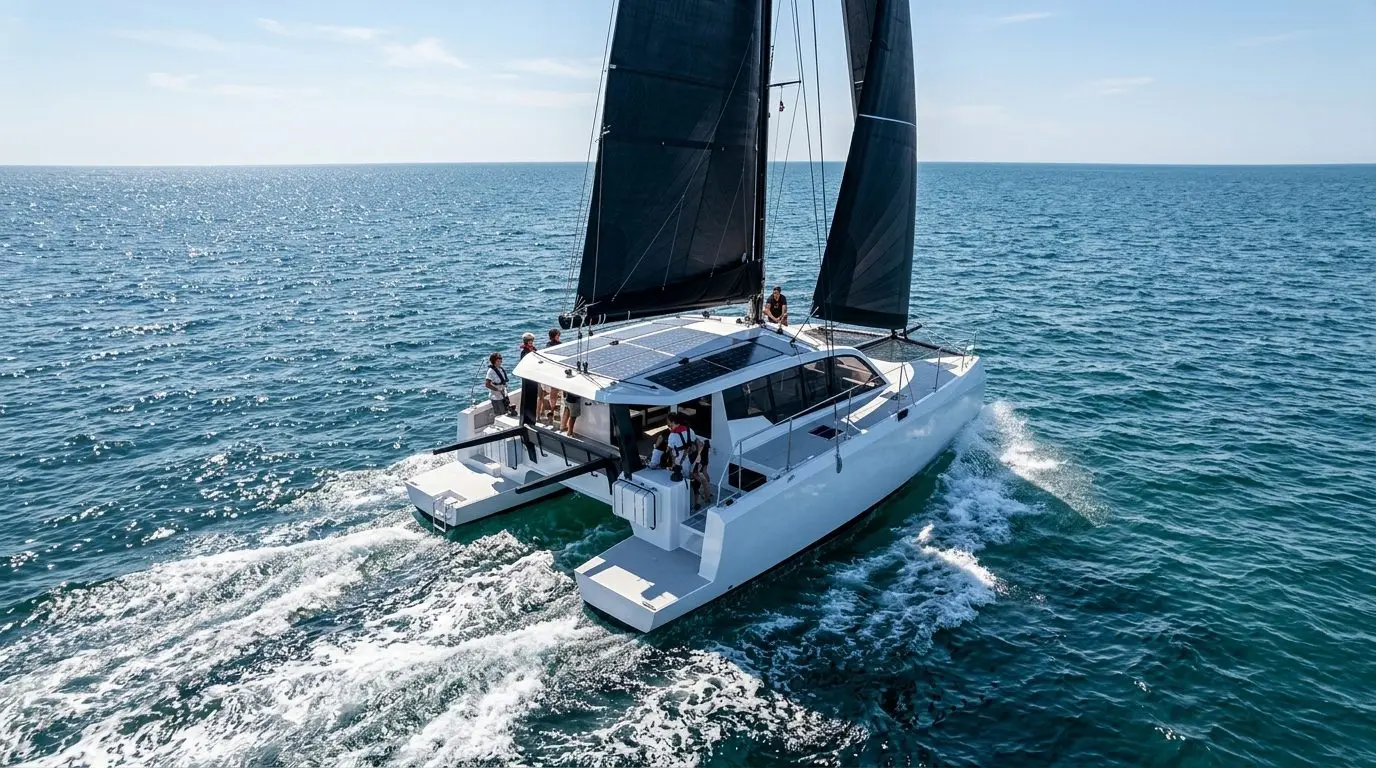
It was the moment when nearly thirty years of innovation finally came together in a platform that could be offered not as a one-off custom project, but as the world's first semi-production accessible performance catamaran.
Why Accessibility Makes Better Boats
For decades we have worked on the basis that accessibility improves boats for everyone.
- fewer steps
- easier movement
- better handholds
- simpler sail handling
- reduced physical effort
- safer watch keeping
- better visibility
- easier single-handing
- less maintenance
- access and serviceability
A New Hull Changes Everything
The turning point came unexpectedly.
While developing a new generation of faster offshore hulls, designers at the Multihull Centre produced a shape that was wider, flatter and significantly more stable than previous designs.
Initially the objective had been straightforward: Go faster. Especially off the wind.
Instead, the team realised something much more significant.
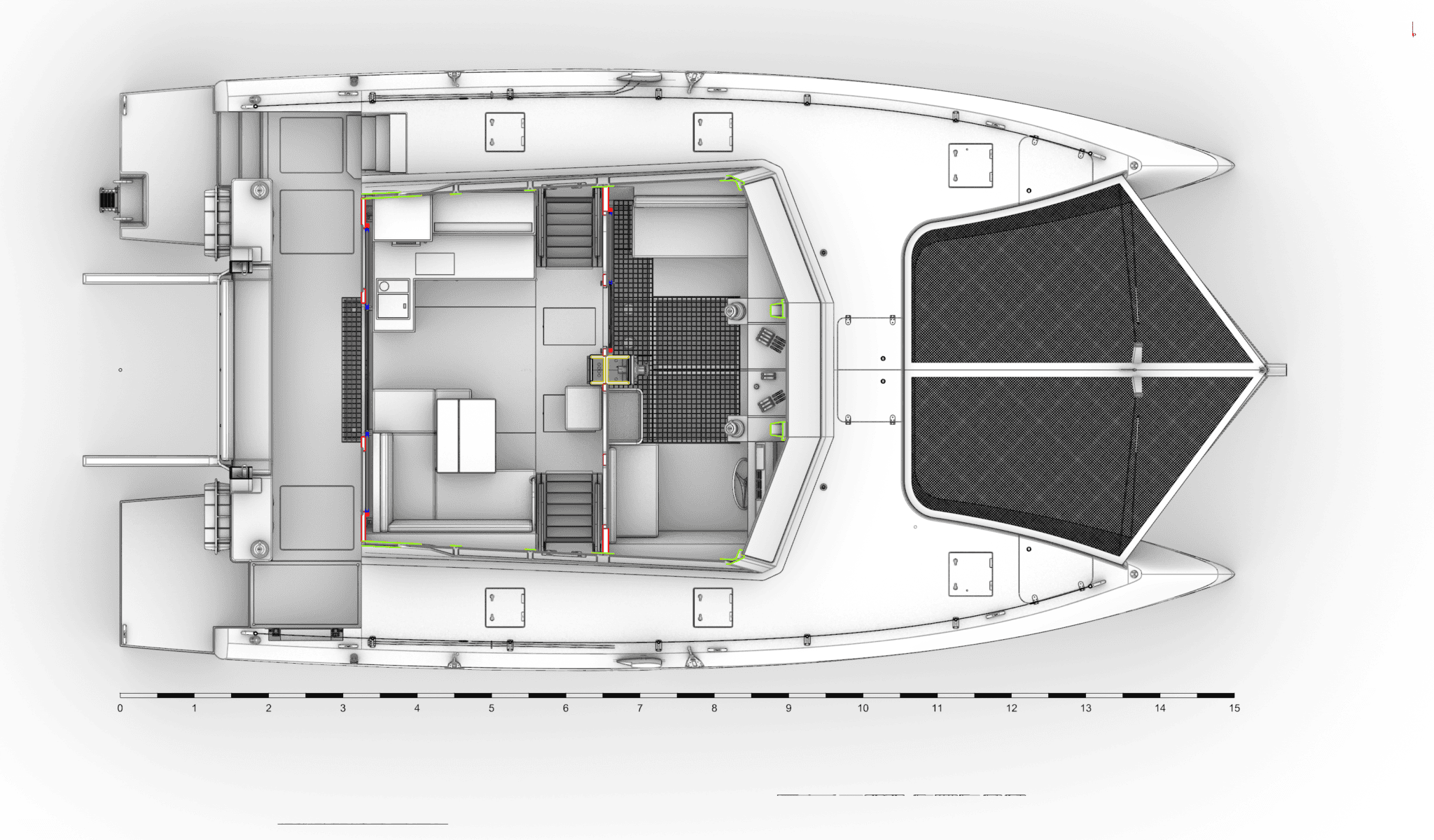
The same hull that promised higher speeds also offered remarkable opportunities for accessibility – being wider, chairs could turn around even down in the hulls…
The generous internal volume, low immersion, wide floor areas and stable platform opened possibilities that conventional production catamarans simply could not offer.
Suddenly, accessibility no longer needed to mean compromise. It could become part of the design from the very beginning.
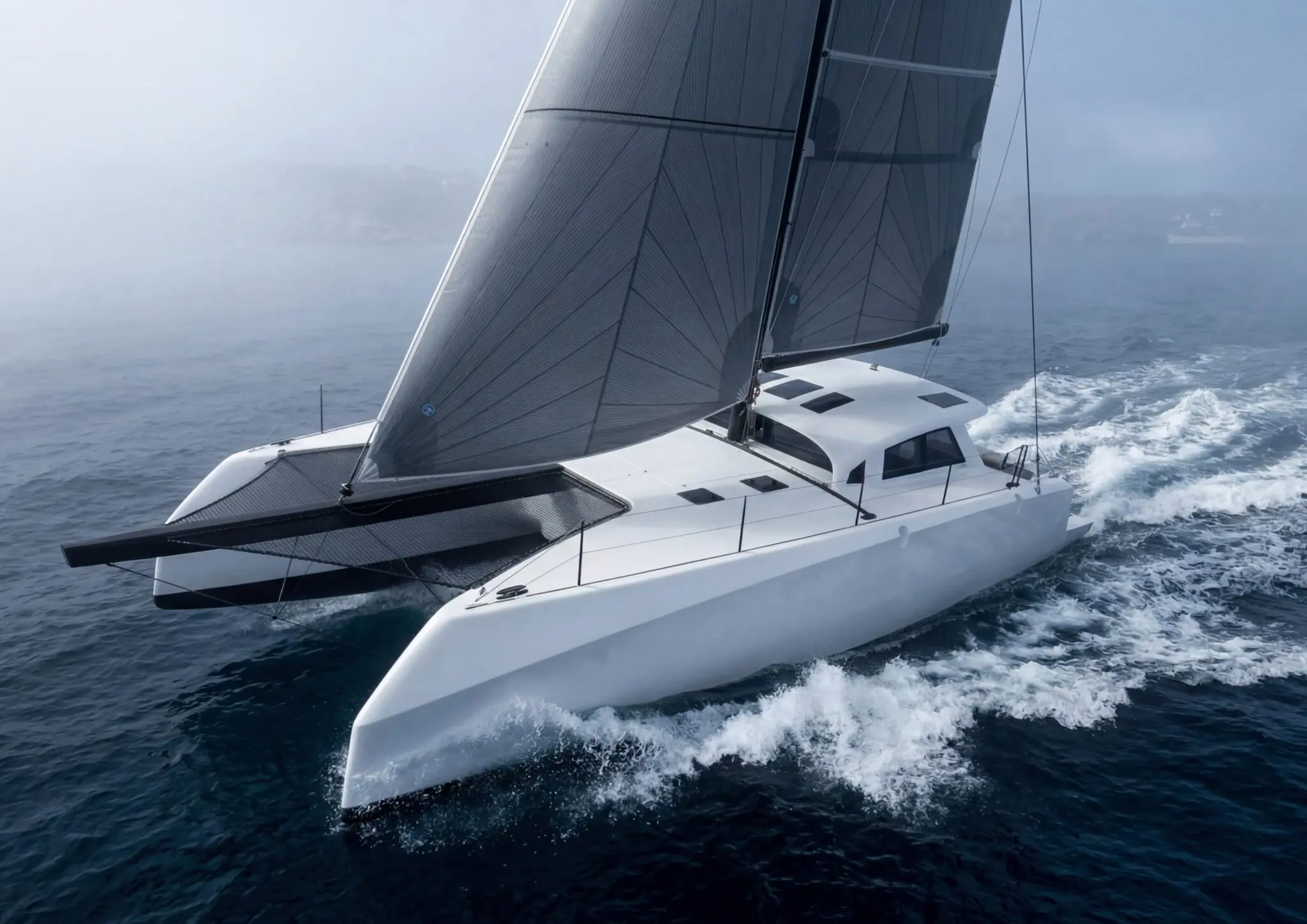
The Dazcat 1500
That discovery became the Dazcat 1500 collection.
Rather than producing one specialist vessel, Dazcat developed an entire platform.
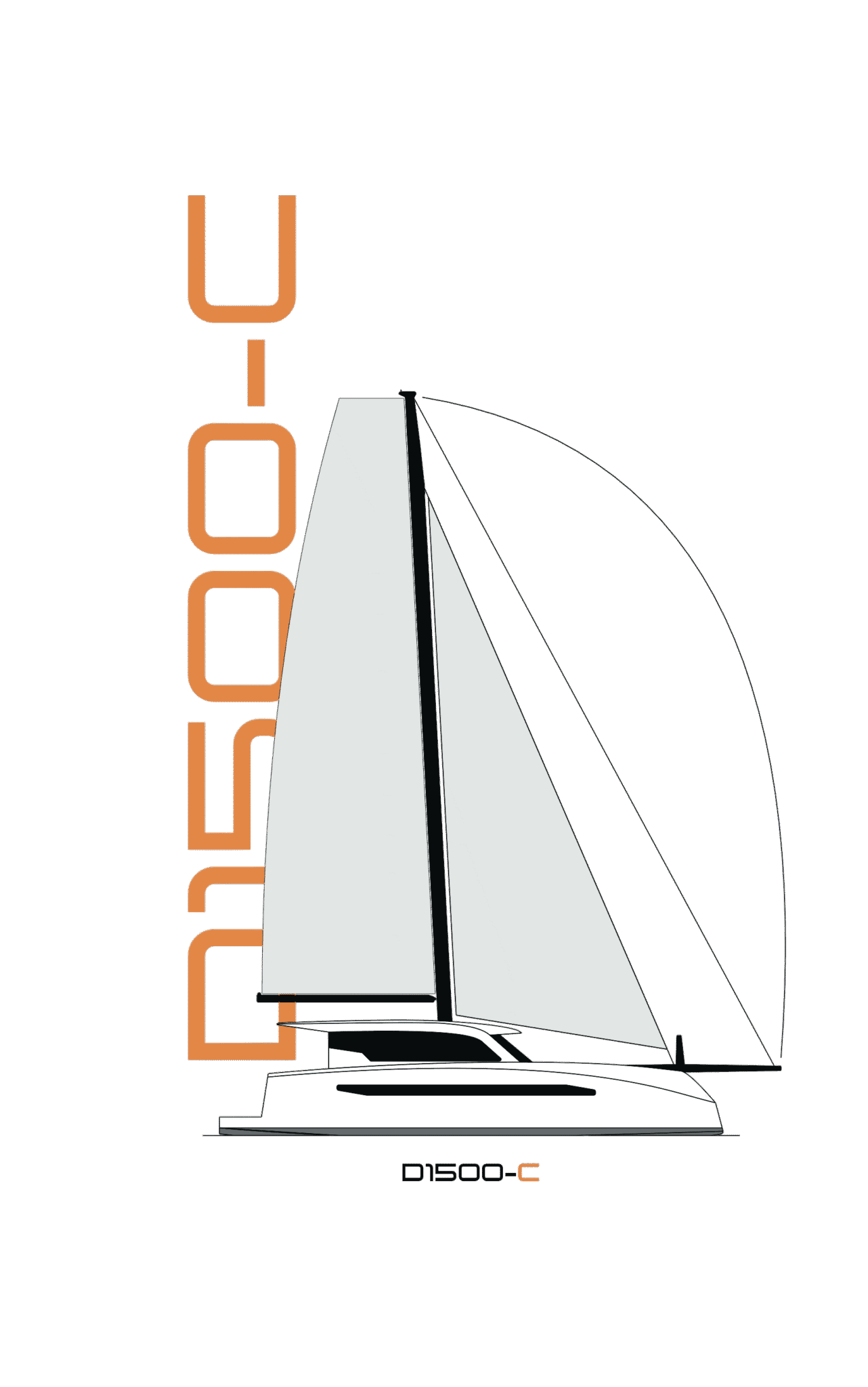
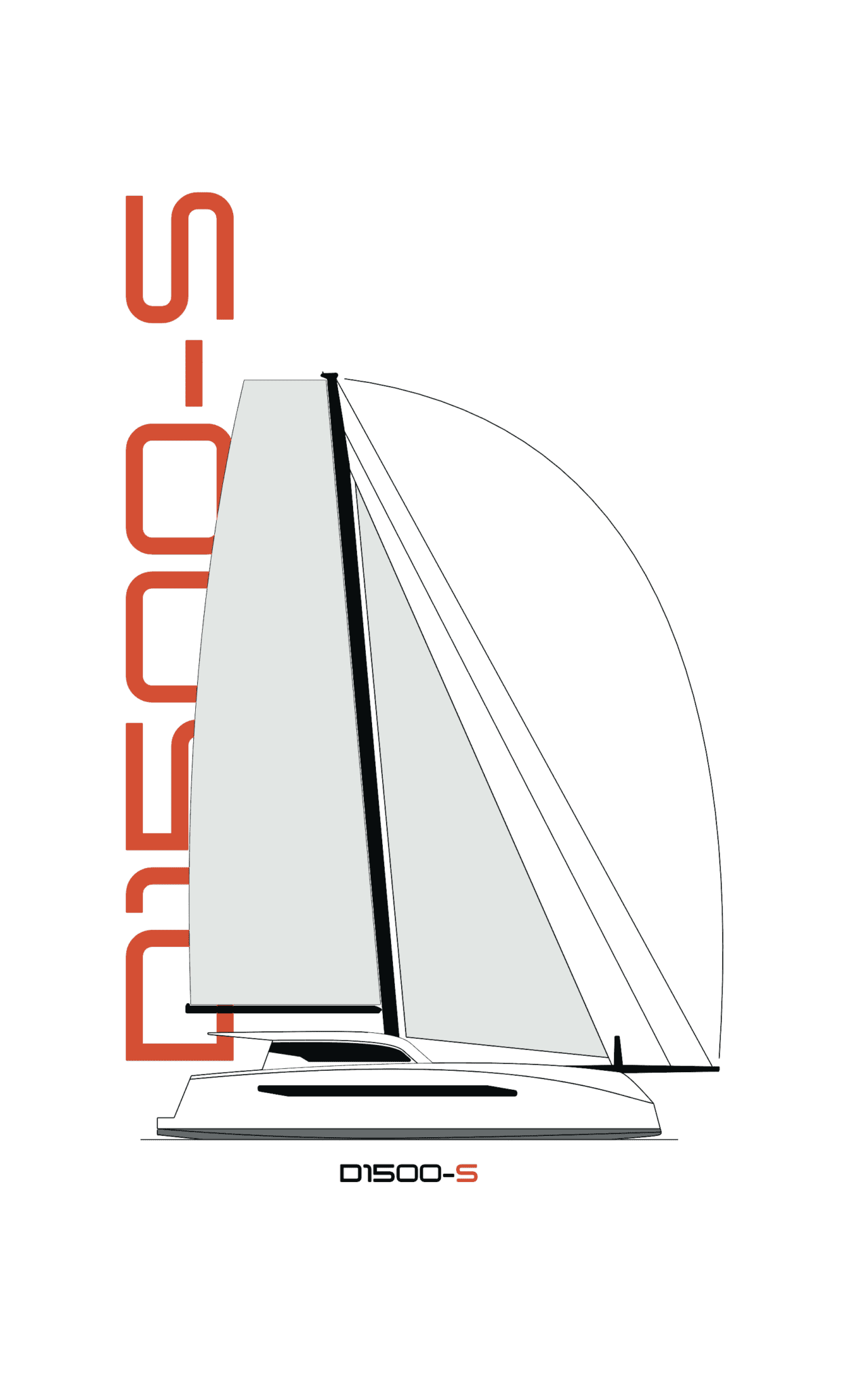
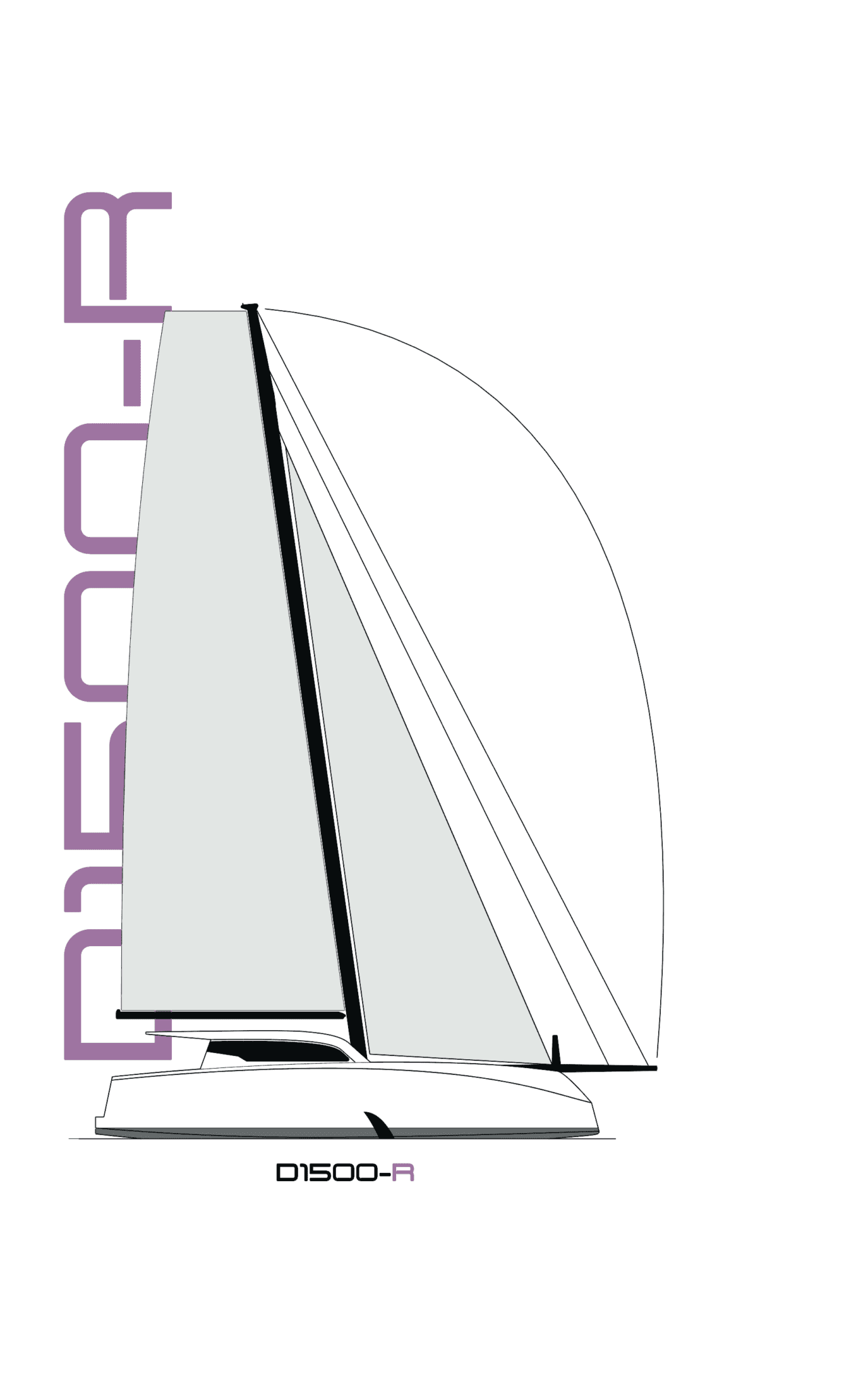
Three distinct models now share the same innovative hull design:
Each can be tailored extensively by its owners, but all benefit from the same design philosophy that combines performance, strength and accessibility.
Most importantly, accessibility is no longer something added afterwards. It is designed in from the outset.

Building with the Disabled Sailors Association
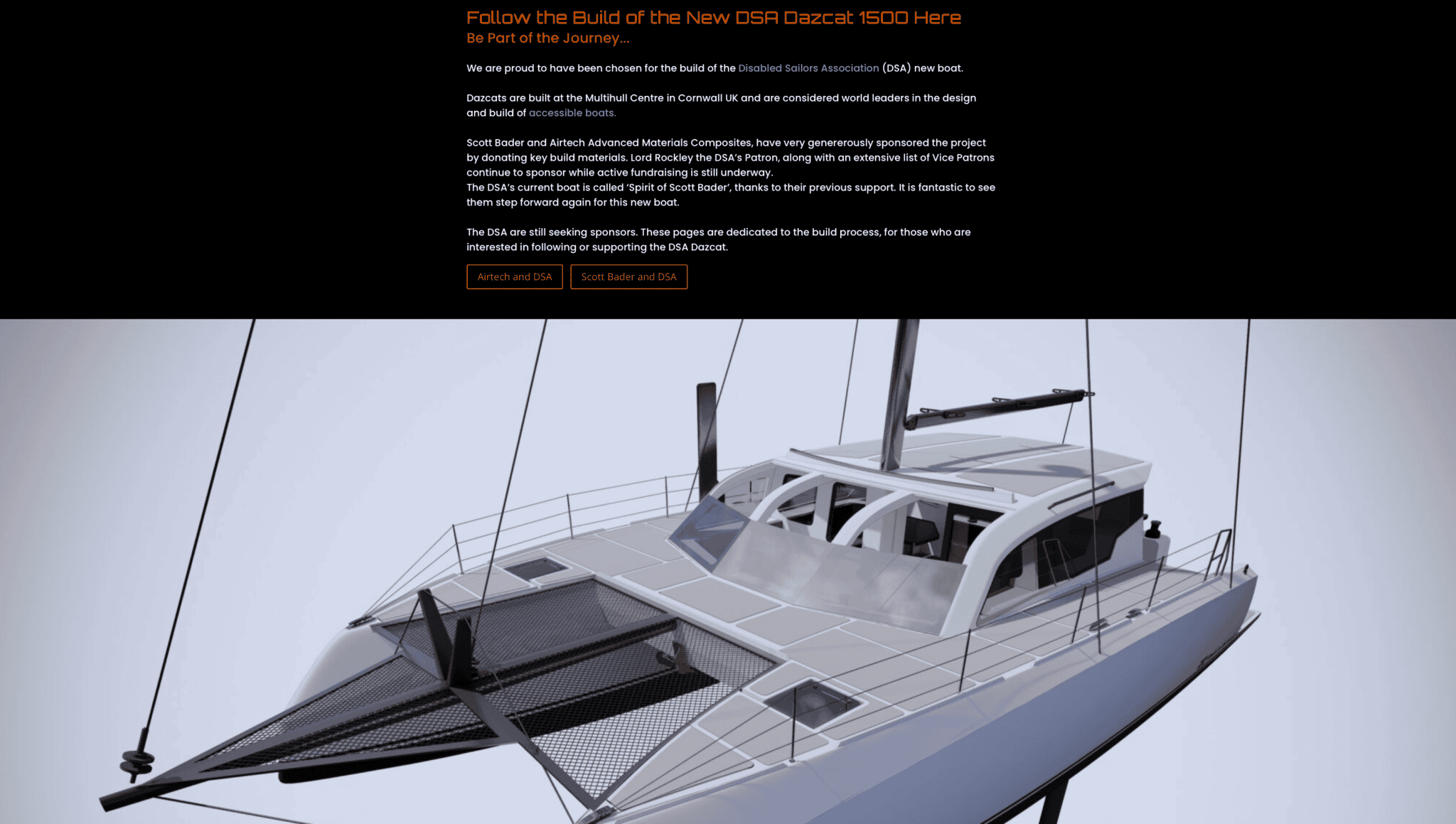
The first D1500 is currently being built here at the Multihull Centre in Cornwall for the Disabled Sailors Association (DSA).
The charity has already enabled more than 50,000 disabled people to experience sailing and hopes the new catamaran will dramatically expand those opportunities. The project aims to accommodate multiple wheelchair users, provide safe independent movement throughout the vessel and eventually allow over 2,000 sailing experiences each year.
Decades of experience from the DSA, together with Dazcat's own accessible projects, have been brought together to create something entirely new.
The ambition reaches beyond a single boat.
It is to establish a genuine production platform that charities, sailing organisations and private owners around the world can adopt and adapt.
Accessibility Without Compromise
What makes the D1500 unusual is that it was never intended to become "the accessible version."
It is simply a Dazcat: Fast. Strong. Ocean capable. Efficient. Adapted to owner requirements.
Only now, those same qualities can be enjoyed by sailors with far more diverse physical abilities.
Sailing without Barriers
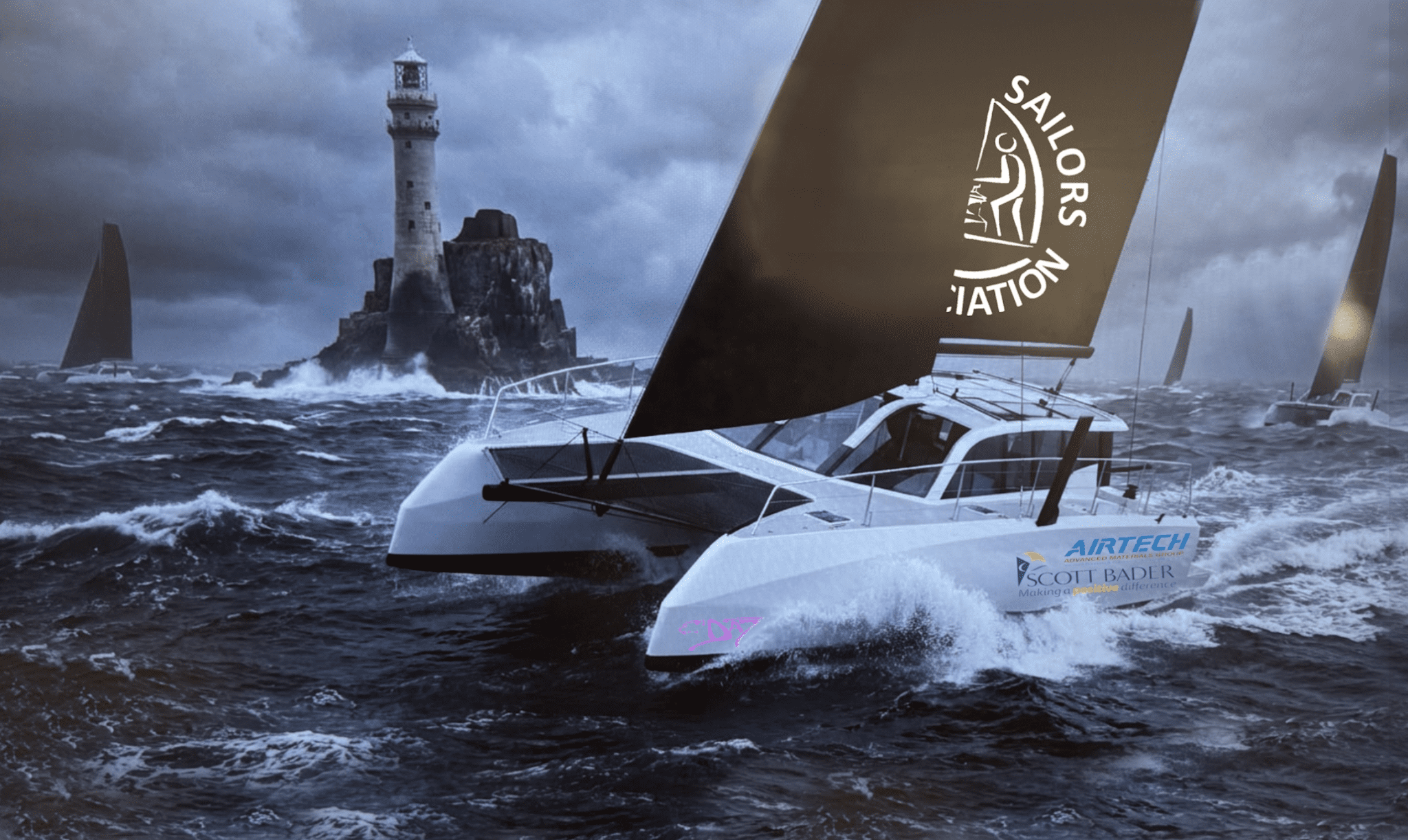
The DSA also aspire to competing in offshore races, like the Fastnet. We'd love to see them do that in their Dazcat, but maybe taking it a bit easier than this, as we'd advise all our Dazcats!
The Second D1500 Already Demonstrates the Wider Appeal
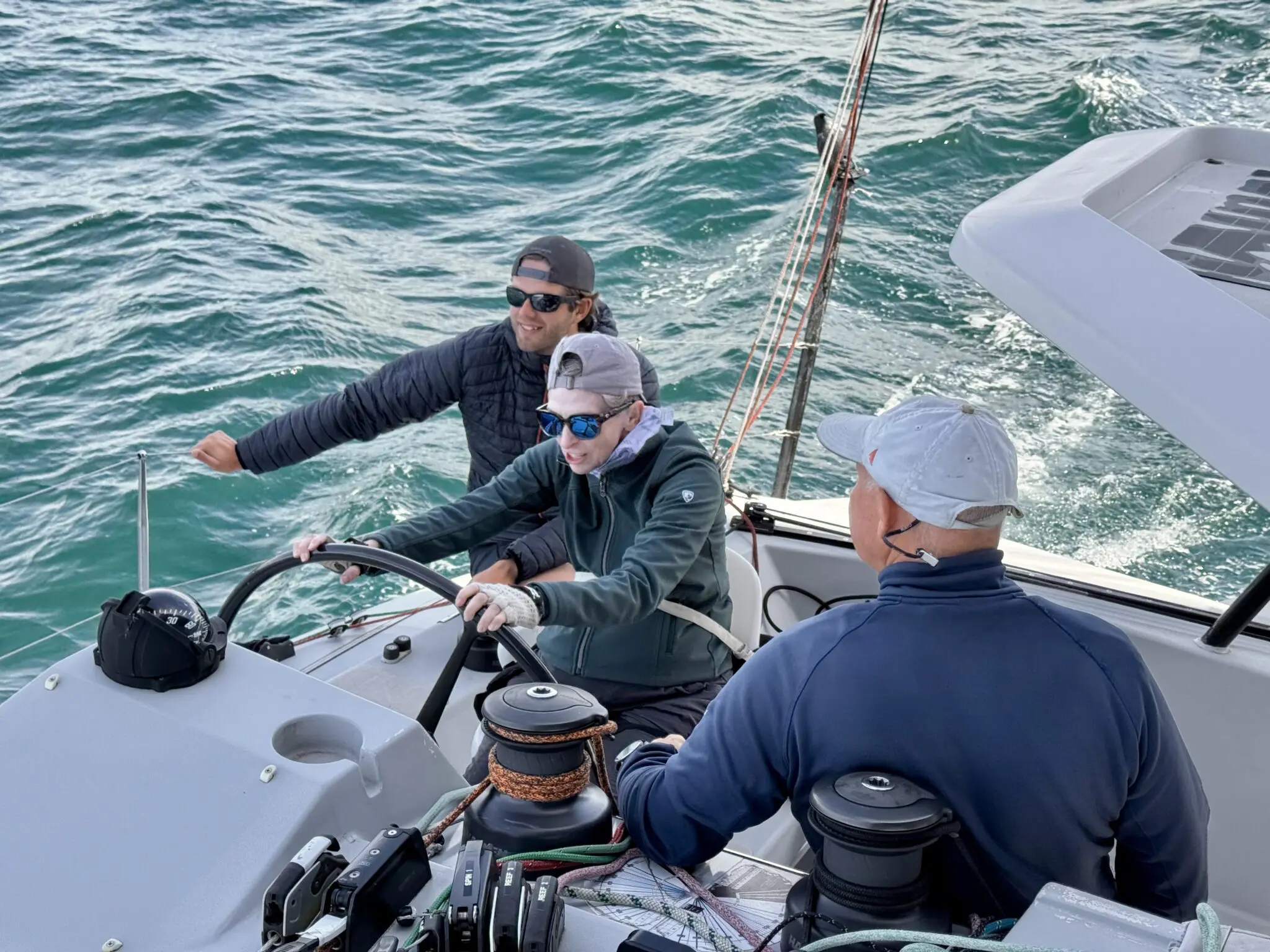
Being built for American sailors Jen and Tim French of @Sailing_Wheels, it will become their floating home as they cruise Europe, the Mediterranean, the Caribbean and eventually return to the United States. Jen's experience as a Paralympic silver medallist and the couple's years of dingy racing together have helped shape countless owner-led refinements throughout the design process.

Looking Forward
The Dazcat story has never stood still. Each generation has built upon the lessons of the last.
Race boats have informed cruising boats.
Cruising boats have informed accessible boats.
Owner experiences have become future innovations.
The same pursuit of better sailing that produced Fastnet winners and offshore champions has now produced something potentially far more significant.
The world's first semi-production accessible performance cruising catamarans.
For Dazcat, this is not a departure from its history. It is the natural continuation of it. The destination may be different.
The philosophy remains exactly the same:
- Build exceptional boats.
- Listen to sailors.
- Challenge convention.
- And make every new design capable of taking more people, further, with greater confidence than ever before.
Proven Multihull Performance
Our passionate and experienced team has been designing, building and sailing multihulls since 1988. The combination of exceptional qualities clearly apparent in Dazcat’s range of cruiser-racer catamarans is the cumulation of first-hand sailing experiences in every type of condition. The evolutionary cycle of repeatedly bringing almost 40 years of experience back to the design and build stages has consistently driven our advances in innovation and creativity.
Responding to our clients' needs
As always, feel free to contact us to discuss any of our range.
Location
Foss Quay
Mill Road
Millbrook
Cornwall
PL10 1EN
United Kingdom
Phone
(44) 1752 823 900
Visit the Contact Us page for details.
Hours
M - T : 9am–5pm
F: 9am - 2pm
Sat : By appointment
Sun : Closed